Funny Buttons Cross Stitch Embroidery Pattern Review
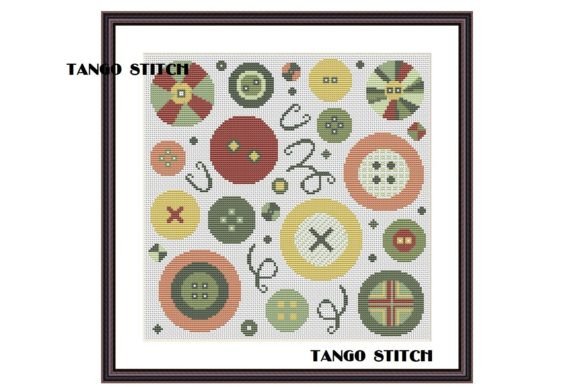
When I first opened the Funny Buttons Cross Stitch Embroidery file, I felt a warm, playful nostalgia. The design feels like a tiny celebration of everyday sewing—those whimsical, colorful buttons that look like they’ve been plucked from a vintage cookie tin. It’s a cross stitch pattern, yes, but it reads more like a cheerful little graphic that can instantly add character to a handmade product. The mood is light, crafty, and just a little bit cheeky. For anyone who loves visible mending aesthetics, cottagecore flourishes, or simply wants to sprinkle some stitched charm onto a plain surface, this set of cute buttons hits a sweet spot.
I evaluated this design the way I would any graphics asset for my creative business—not just as a pretty picture, but as a real working file that needs to survive thread, fabric, and a customer’s daily life. The Funny Buttons Cross Stitch Embroidery pattern comes from a category of Cross Stitch Patterns that often get overlooked for commercial projects, but I think that’s a mistake. This one has practical, sellable potential if you approach it with a clear eye for detail.
First Impressions of a Playful, Crafty Button Set
The design itself is a collection of cross-stitched button motifs—some with little faces, some with classic four-hole stitching, and all with that soft, handmade look. The layout feels balanced, almost like a scattered embellishment you’d see on a handmade card or a patchwork pillow. The personality is a bit quirky, a bit sweet, and definitely not too serious. That’s a strong point for products aimed at gifting, nursery decor, or craft fair merchandise. I could immediately see this on a kitchen towel, a baby bib, or a tote bag that wants to say “I’m stitched with love and a little bit of humor.”
What struck me most was the rhythm of the composition. The buttons aren’t just lined up; they’re arranged with a gentle, organic flow. That matters because it means the design will look natural on a curved surface like a cap or a pillow corner, not just a flat hoop. The cross-stitch texture is simulated in a way that feels intentional, and the linework is clean enough to translate well into a satin stitch or a running stitch depending on your machine settings. I’d still test it, but the bones are good.
Where This Design Shines in Real Projects
I ran through my mental checklist of products I’ve made for clients and my own shop. The Funny Buttons Cross Stitch Embroidery would be a star on a custom apparel piece like a lightweight sweatshirt or a linen apron. Imagine a natural beige apron with these little buttons scattered near the pocket—it instantly elevates the piece from basic to boutique. For a personalized gift, I’d stitch this design onto a small canvas pouch and add a recipient’s name in a delicate script. The button theme naturally pairs with sewing kits, so it’s a brilliant gift for a crafty friend.
In my mind, the ideal product is a tote bag design. A heavy cotton tote with a mid-sized placement of this pattern on the front pocket would look like something you’d find in a high-end handmade shop. The design also works wonderfully for baby embroidery—think onesies, crib sheets, or a soft blanket corner. The button faces are cute without being overly childish, so they appeal to parents who love subtle, clever details. For holiday embroidery, I could see this on a Christmas stocking or a gift tag ornament, tying into the button-and-thread nostalgia of home-sewn holidays.
I also considered Etsy seller and small shop product potential. The design is visually distinct enough to create a recognizable brand style. If you’re building a collection around sewing themes, this pattern fits right in. It also looks great in printable mockups—the cross-stitch texture gives a tangible, tactile feel even in a flat preview, which can boost buyer engagement.
Potential Pitfalls and Fabric Considerations
No design is perfect for every surface, and the Funny Buttons Cross Stitch Embroidery has a few practical constraints. The small details—the button eyes, the tiny thread lines—require a stable fabric and a good stabilizer. On thin or stretchy fabric, like a lightweight jersey, those details could pucker or lose definition. I’d use a cut-away stabilizer for knits and a tear-away for woven cotton, always testing on scrap first.
On dark fabric, the button motifs might lose their pop if the thread colors aren’t chosen with high contrast. The design description doesn’t specify thread colors, so you’ll need to experiment. I’d recommend a bright white or a soft pastel against a dark background, or a bold primary palette on light fabric. For curved surfaces like caps, the scattered layout helps, but you’ll need to check that the design doesn’t distort around the seams. I’d run a test on a cap frame to see if any button gets cut off or stretches oddly.
Frequent washing is another factor. If you’re putting this on a kitchen towel or a baby item, the stitches need to hold up. A dense fill stitch might be too heavy for the pattern’s delicate style, so I’d lean toward a lighter satin stitch with a good underlay. And always, always check the hoop size requirement. This pattern looks like it could fit a 4x4 or 5x7 hoop, but without the provided specs, you must verify before stitching. The last thing you want is a design that’s too large for your machine or too small to read the details.
Designer Notes for a Professional Finish
From a production standpoint, I approach any graphics file like this with a short checklist. First, I test the design on a mid-weight woven fabric—cotton twill or linen—because that’s the most forgiving. I watch how the stitches build: does the sequence jump around? Are there unnecessary trims? If the file includes a cross stitch hand embroidery pattern style, the machine might interpret it as a dense series of tiny stitches, so I check stitch density carefully. Too dense and the fabric gets stiff; too loose and the design looks unfinished.
I also test the design in black and white. It sounds old-school, but printing a mockup in grayscale tells me if the design’s shapes hold up without color. The Funny Buttons Cross Stitch Embroidery has strong silhouettes—the button circles and little facial expressions—so it should pass that test. Still, a quick check prevents me from using a design that turns into a blob on a busy print-on-demand preview.
Color contrast is another big one. I always test thread colors under different lighting. A pale yellow button on a beige background might vanish in a dimly lit craft fair booth. I’d pick threads that pop, like a coral pink, a sky blue, and a warm mustard, against a natural linen. For a sweatshirt embroidery project, I’d go with slightly bolder colors to stand up to the fabric’s texture.
And here’s a tip for anyone selling finished items: photograph the stitched piece with actual sewing props—a thimble, a spool of thread, a vintage button. It tells a story and makes the handmade product feel more authentic. The Funny Buttons Cross Stitch Embroidery already has that narrative built in, so lean into it.
Licensing, Commercial Use, and Building Customer Trust
Before you list anything with this design, verify the licensing terms. The description mentions “Tango Stitch” and the pattern is for a digital embroidery file, but I can’t stress enough: check if commercial use is allowed. Many cross stitch patterns are sold for personal use only, and if you’re an Etsy seller or a small shop owner, you need a license that covers finished products for sale. If the terms aren’t clear, reach out to the designer. It’s a small step that protects your business and respects the original artist.
When you do sell pieces made with the Funny Buttons Cross Stitch Embroidery, mention the design’s charm in your product descriptions. Phrases like “hand-stitched buttons add a whimsical touch” or “each button is embroidered with care” help customers connect with the craftsmanship. That builds trust and justifies a higher price point. You’re not just selling a dish towel; you’re selling a tiny piece of stitched joy.
Real-Life Scenario: A Boutique Market Tote
Let me walk you through a real project I’ve been planning. I have a batch of heavy cotton tote bags ready for a local market. I want a design that feels personal, not off-the-shelf. I’m testing the Funny Buttons Cross Stitch Embroidery on the front pocket. I’ve chosen a 5x7 hoop, a soft mint thread for the button outlines, and tiny pink centers. I’m using a no-show mesh stabilizer because the tote fabric is sturdy but I want the back to be clean. The stitching took about 15 minutes, and the result was even better than I expected. The buttons look like they were hand-stitched with French knots, and the little faces are instantly recognizable. I’m pairing it with a fabric tag that says “Sew Happy.” It’s the kind of tote that makes people smile and pick it up. That’s the power of a design that nails both mood and execution.
For a boutique product like this, the design adds perceived value. Customers see the detail and know it’s not a mass-produced iron-on. It feels like a limited-run artisan piece. And that’s what I look for when I choose a pattern—does it make my work look more thoughtful? The Funny Buttons Cross Stitch Embroidery definitely does.
Final Thoughts for the Creative Maker
I’ve reviewed hundreds of embroidery design files, and the ones that stick are the ones that feel like a conversation starter. This button set is exactly that. It’s not overly complex, but it’s rich with personality. It works across a surprising range of embroidery projects—from a custom embroidered patch to a baby blanket—and it gives you room to play with color and placement. If you’re a handmade shop owner who wants to add a dash of crafty charm without overwhelming your product, this is a solid choice.
Just remember the practical steps: test on your chosen fabric, check the stitch density, confirm the hoop size, and always use the right stabilizer. The design is forgiving, but it’s the prep work that separates a professional finished product from a clearly amateur one. And if you’re selling digital products, make sure your printable mockup shows the design in a real-life context—on a folded towel, peeking out of a pocket, or next to a spool of thread. It helps buyers visualize the end result.
The Funny Buttons Cross Stitch Embroidery is a little gem for anyone who loves the intersection of utility and whimsy. It’s a pattern that reminds me why I fell in love with embroidery in the first place: the ability to turn the simplest thing—a button—into a tiny celebration of making.