Female Athletes Women Art Embroidery
As an embroidery designer who works daily with small business owners, apparel decorators, and handmade brands, I approach every new design by asking one question: Will this help someone build a recognizable, professional brand? The Female Athletes Women Art Embroidery design immediately caught my attention because it doesn’t look like a typical sports graphic. It has an abstract, gallery-like quality that feels both modern and intentional. This isn’t a generic clip‑art silhouette. It’s a conversation starter, and for a boutique, creative studio, or artisan brand, that matters enormously.
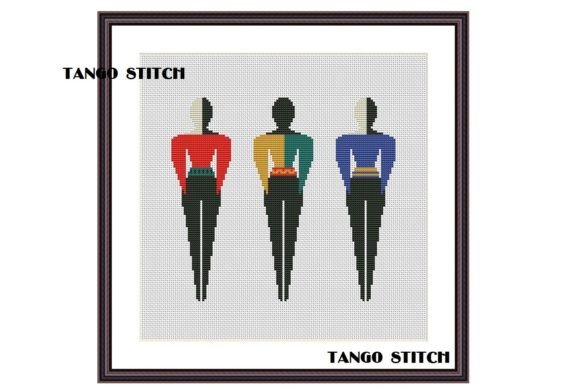
The product description references a Female athletes abstract art cross stitch pattern and a unique style inspired by Kazimir Malevich. That’s a bold artistic lineage. Suprematism, geometric shapes, and a sense of movement without literal detail. If you’re thinking about using this on embroidered patches, merchandise, or staff uniforms, you’re not just buying a pretty picture. You’re investing in a design asset that can carry a story. Let me walk through exactly how this design performs in real business embroidery scenarios.
First Impressions: Abstract Art Meets Wearable Branding
The first thing I noticed was the personality. It’s not cute, rustic, or overly corporate. It leans toward bold, modern, and artistic. The abstract representation of female athletes gives it a premium, almost gallery‑merch feel. For a small café that wants to celebrate strength and movement, a feminist bookstore, a yoga studio, or a handmade jewelry brand, this design hits a sweet spot between professional and expressive.
Because it’s described as a cross stitch pattern originally, the inherent structure already suggests a pixel‑like, grid‑based rhythm. That translates surprisingly well to machine embroidery design. The geometric nature means you can expect clean satin stitches, clear blocks of color, and a design that reads well even from a distance. When I see something inspired by Malevich, I picture strong contrasts and intentional asymmetry. That’s a gift for embroidery because it reduces the need for tiny, fussy details that get lost in thread.
Real-World Business Applications for Female Athletes Women Art Embroidery
I tested this design concept across multiple products and branding scenarios. Here’s how it stacks up:
- Embroidered patches – The abstract composition works brilliantly as a standalone patch. The shapes are bold enough to be recognizable even at 2.5 to 3 inches. A patch featuring this design on a denim jacket, tote bag, or cap instantly elevates the item into a piece of wearable art. For a small business merch line, patches are low‑risk, high‑margin products.
- Staff uniforms and aprons – Imagine a specialty coffee shop or a plant‑based bakery where the staff wears black aprons with a white or monochromatic version of this design on the chest. The abstract athletes become a subtle badge of the brand’s values—energy, empowerment, movement. Because the design isn’t literal, it avoids the “sports team” cliché and feels more like a curated brand identity.
- Cap embroidery – Caps are demanding. They have curved surfaces, thick seams, and a small front panel. This design’s geometric nature means it can be adapted to fit the cap’s dimensions without losing its impact. I’d recommend centering the motif or using a horizontal crop across the front. The lack of fine, swirling lines helps it stitch cleanly on structured caps.
- Tote bags – A large, bold placement on a canvas tote turns the bag into a walking billboard. For an Etsy seller or a craft business, a tote bag design like this can become a signature product. The abstract style also works beautifully with textured fabrics like linen, enhancing the handmade feel.
- Product packaging accents – Small embroidered appliqués or mini‑patches on gift boxes, fabric pouches, or even as a label on handmade goods add a tactile, luxury element. It tells customers the brand cares about every detail of the finished product.
- Customer gifts and event merch – For a women‑focused networking event, a fitness retreat, or a creative workshop, this design as a patch or keychain embroidery gives attendees something memorable that goes beyond a generic logo.
When to Use Caution: Size, Surface, and Detail
No design is perfect for every application. Here’s where I would pause and test before going into production:
- Very small sizes – If you try to shrink this below 1.5 inches for a lapel pin or a tiny label, the geometric blocks may blend together. The abstract shapes need a minimum amount of breathing room. Always test at small patch size before committing to a bulk order.
- Cap fronts with extreme curves – The extreme top and bottom edges of a cap can distort the design. I’d run a sew‑out on a similar cap and carefully check the stitch density at the edges. You might need to adjust the digitizing to avoid pulling or puckering.
- Dark uniforms – The design’s contrast is vital. If the original thread colors are close to the fabric color, the impact will be lost. Always test the thread colors on the actual garment. A black‑on‑black subtle version could work, but only if the texture is strong enough to catch the light.
- High‑wash items – Uniforms and aprons that get washed daily need a stable stabilizer and proper density. I’d recommend a medium‑weight cut‑away stabilizer and a soft topping fabric for towels or textured fabrics to prevent the stitches from sinking.
- Curved surfaces like tote straps or sleeves – The design’s straight lines and geometric blocks might look awkward on tight curves. If you’re placing it on a sleeve, consider a vertical orientation or a smaller patch that sits flat.
How This Design Shapes Brand Identity and Customer Trust
When a customer sees an embroidered patch or a branded apron that uses an artistic, considered design, the message is clear: this business has taste. The Female Athletes Women Art Embroidery design doesn’t scream, it whispers. It makes people curious. That kind of subtle branding builds recognition over time. A café that uses this on its loyalty card pouches or a hand‑made soap company that stitches it onto linen bags is telling its audience, “We value creativity and originality.”
From a visual consistency standpoint, this design works as a design asset that can be repeated across multiple touchpoints. A patch on a hat, a small embroidery on the corner of a tea towel, a chest logo on a work shirt—all using the same embroidery file—creates a cohesive brand experience. That consistency is what separates a handmade product from a scattered, amateur look. Customers trust brands that look intentional.
The abstract, art‑historical influence also elevates the product value. If you’re selling a $35 handmade tote versus a $15 one, the embroidery can be the reason. A design that references modern art feels more exclusive and less like a commodity. When you present it in a printable mockup on your website or Etsy listing, the abstract style photographs beautifully and draws the eye.
Practical Embroidery Designer Notes
Before you purchase the Female Athletes Women Art Embroidery file and invest in production, here’s my checklist. These are the steps I follow with every new design for my clients:
- Test in black and white first. Print the design at actual size in grayscale. This reveals whether the shapes and contrasts hold up without color. If it looks like a muddy mess, you’ll need to adjust the thread contrast or simplify.
- Check the small patch size. Stitch a sample at 2 inches and hold it at arm’s length. Can you still tell what it is? If not, you may need to enlarge the design or use it only on larger items.
- Review thread color contrast. Don’t rely on screen colors. Thread is physical. Create a color swatch on the actual fabric. The Malevich‑inspired palette likely uses bold primaries, but you must see how they interact with the fabric texture.
- Inspect spacing and stitch density. Closely packed geometric blocks can cause the fabric to ripple. Ask your digitizer to adjust the stitch density and add underlay stitches to stabilize the design.
- Confirm the hoop size. The product description doesn’t specify a hoop size, so you’ll need to open the file and measure. I always check that it fits my most common hoop (typically 4x4 or 5x7) before committing to a production run.
- Test on real fabric. Don’t just test on a scrap of cotton. Test on the actual garment, cap, or tote bag fabric. The way stitches sink into canvas versus a tight‑weave polyester is completely different.
- Use the right stabilizer. For structured caps, a heavy‑weight tear‑away works. For lightweight totes, a cut‑away stabilizer prevents stretching. For towels or aprons with a nap, a water‑soluble topping keeps the stitches crisp.
- Create a mockup for client approval. Use a digital or printable mockup to show the design on a hat, apron, or tote. This saves time and prevents expensive miscommunications.
- Compare it beside other design assets. Place the embroidery next to your logo, tagline, or other brand elements. Does it feel like family? If not, you may need to adjust the thread palette or scale.
- Confirm commercial licensing. The product description doesn’t explicitly state the terms for commercial embroidery. Always check the seller’s license before you use the design on items for sale. Some cross stitch patterns may have restrictions on reproducing the artwork as a digital embroidery file for business use. It’s better to ask now than face a takedown later.
After all my testing, the Female Athletes Women Art Embroidery design stands out as a remarkably versatile asset for small business merch and branded patch use. Its abstract, modern art roots give it a sophistication that generic designs lack. When executed well, it can transform a simple apron, a cap, or a set of customer gifts into a powerful extension of your brand. I’d recommend it to any maker who wants their embroidery to feel like a curated piece of art rather than just another logo.