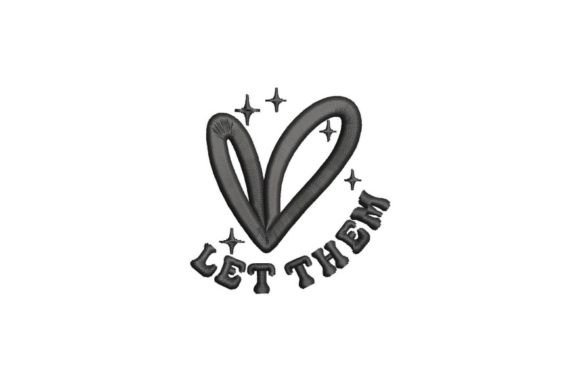
Let Them Embroidery Design, Mental Health
A Quiet Statement That Stitches With Intention
When I first opened Let Them Embroidery Design, Mental Health, I didn’t see a decorative phrase—I saw a pause. A breath. A gentle, grounded affirmation that doesn’t shout but settles in like a well-worn apron or a favorite tea towel folded just so. It’s not ornate. No florals, no hearts, no script swirls. Just clean, confident lettering—likely built with balanced satin stitch and subtle fill stitch for body—and space held thoughtfully around each word. That space matters. In embroidery, silence speaks as loudly as thread.
Where This Design Lives Best (and Why)
Last week, I used Let Them Embroidery Design, Mental Health on a natural linen tote bag for a local therapist’s boutique pop-up. No embellishment—just the design centered on the front panel, stitched in soft heather gray thread. The result? Calm, cohesive, professional—not “crafty,” not “cute,” but quietly resonant. That’s its sweet spot: handmade products where emotional tone matches physical texture. Think sweatshirt embroidery for mental health awareness month, pillow covers for therapy waiting rooms, baby onesies (with care—more on that below), or minimalist kitchen towels for wellness-focused small shops.
It also works beautifully as an embroidered patch—clean edges hold up well when fused or sewn onto denim jackets or backpacks. As a tote bag design, it reads clearly from three feet away. As sweatshirt embroidery, it doesn’t overwhelm the garment’s drape. And because the phrase is short and rhythmically even (“Let / Them”), it scales reliably across hoop sizes without losing legibility.
Fabrics & Fit: Where to Lean In—and Where to Pause
Let Them Embroidery Design, Mental Health thrives on stable, medium-weight fabrics: cotton twill, midweight linen, structured canvas, and brushed fleece. On those, proper stabilizer (a light cutaway or tear-away) keeps the letterforms crisp and prevents puckering—especially important since this isn’t a dense fill-stitch design; clarity depends on clean satin stitch definition.
Proceed with extra attention on:
- Thin or stretchy fabric (like lightweight jersey or rayon blends): The design’s open spacing means any distortion shows fast. Use adhesive + cutaway stabilizer, and test stitch density—too much fill can make letters stiff and unyielding.
- Dark fabric: Check thread color contrast early. Light gray or oatmeal thread reads warmly on charcoal, but white can glare. Always test a small section before committing to a full run.
- Curved surfaces (caps, curved pillow fronts): The straight-line layout means it’s less ideal for high-crown caps unless resized and re-digitized for curve compensation.
- Baby embroidery: Soft, low-density stitching is essential. Avoid heavy underlay or dense satin—opt for lighter thread weight (40- or 50-weight) and confirm stitch count isn’t excessive for delicate knit onesies.
What This Design Does for Your Craft Business
As an Etsy seller and small shop product developer, I’ve seen how phrases like this shift buyer engagement. Let Them Embroidery Design, Mental Health doesn’t sell itself as “cute” or “trendy”—it sells as aligned. Customers who choose it are signaling values: compassion, boundaries, quiet strength. That builds trust faster than a flashy motif ever could.
For commercial embroidery, it layers cleanly into brand consistency—especially for wellness studios, counseling practices, or mindful apparel lines. When paired with a simple printable mockup (think neutral background, natural lighting), it elevates perceived value without overdesigning. And because it’s understated, it avoids dating quickly—unlike seasonal or highly stylized designs, this one stays relevant across holiday embroidery, wedding gifts (think “Let them be happy” on linen napkins), or year-round boutique branding.
Designer Notes You’ll Actually Use
Before stitching your first Let Them Embroidery Design, Mental Health project, do these five things:
- Test on scrap fabric—same type and weight as your final piece. Watch how the satin stitch flows on your machine. Does it skip? Does the underlay show?
- Review stitch density in your embroidery software. If it feels heavy for your fabric choice, reduce density slightly—but don’t sacrifice letter integrity.
- Confirm hoop size and whether the design fits comfortably within it, leaving at least ¼" margin all around. Tight hooping = distorted letterforms.
- Inspect small details—especially the terminals of “L” and “T.” Are they sharp or rounded? Does the “e” in “Let” have enough interior clearance to avoid filling in?
- Check licensing. Since this is marketed as a machine embroidery design file for creating gifts and apparel, verify whether your intended use—selling finished embroidered items or reselling the digital embroidery file—falls within permitted terms.
Final Thought: Less Thread, More Truth
Not every embroidery file earns a permanent place in my working library. Let Them Embroidery Design, Mental Health did—because it balances simplicity with sincerity. It’s not just an inspirational embroidery design. It’s a tool for thoughtful making: one that supports custom apparel with emotional resonance, helps craft businesses communicate values without words, and reminds us that sometimes the most powerful embroidered statement is the one that leaves room to breathe.
If you’re choosing this for a client project, a holiday embroidery batch, or your next small shop product drop—trust the quiet. Then stitch it with intention, stabilize it with care, and let the message land exactly as it should: gently, clearly, and without clutter.