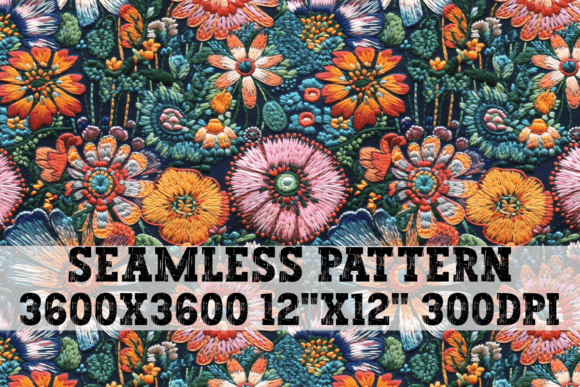
Flower Embroidery Scene Seamless Pattern
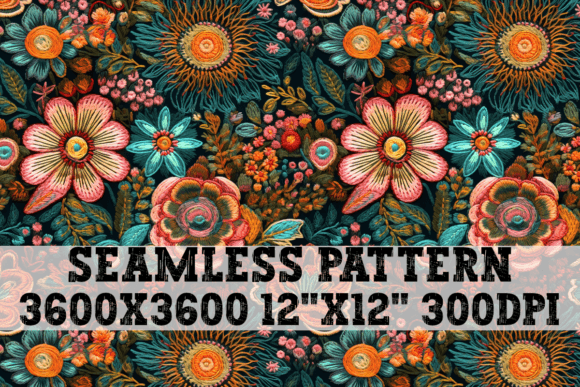
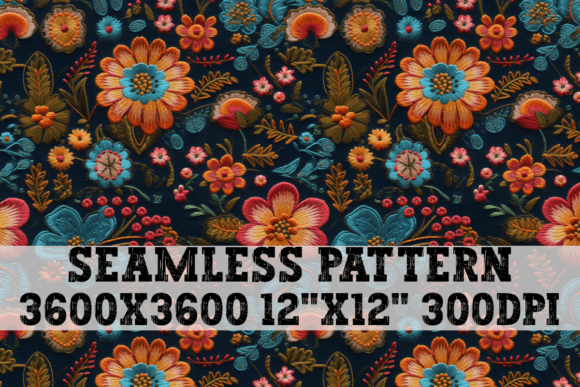
As a designer who’s stitched hundreds of client projects—from boutique baby blankets to limited-run apparel drops—I opened Flower Embroidery Scene Seamless Pattern expecting charm. What I found was something more useful: quiet confidence. This isn’t a loud, trend-chasing motif. It’s a soft-spoken, botanical rhythm—delicate but not fragile, detailed but not fussy. The 12″ × 12″ tileable PNG at 300 dpi feels like stepping into a sunlit garden path where blossoms repeat with gentle variation—not identical clones, but siblings in the same family. That subtlety matters when you’re stitching for real people, not just previewing on screen.
First Impressions That Hold Up Off-Screen
The mood is calm, organic, and quietly celebratory—think spring showers, not bridal bouquets. There are no sharp angles or rigid symmetry; instead, vines curl loosely, petals overlap naturally, and negative space breathes between clusters. That spacing isn’t just aesthetic—it’s functional. When translated to stitch, it means fewer dense fill areas, less thread buildup, and better drape on lightweight fabrics like linen tea towels or cotton baby onesies. I immediately pictured this as the central motif on a custom embroidered tote bag for a local florist’s pop-up—stitched in ecru thread on oat-colored canvas, with the pattern subtly repeating across the front panel. Customers wouldn’t just see “flowers”—they’d feel the care in the rhythm.
Where It Shines (and Where It Asks for Thought)
Flower Embroidery Scene Seamless Pattern works beautifully on mid-to-large-scale items where its scale and flow can settle: sweatshirt yokes, pillow covers, apron bibs, and kitchen towel borders. On a relaxed-fit unisex sweatshirt, repeated across the back shoulder seam, it reads as intentional design—not filler. As a background for a small monogrammed patch? Yes—but only if the patch itself is 4″ or larger. Smaller hoops (under 4″ × 4″) will crop the pattern awkwardly, losing its seamless magic and turning delicate stems into abrupt cut-offs.
Texture matters here. On smooth cotton twill or stable quilting cotton? Excellent clarity. On stretchy jersey or thin rayon challis? Proceed with extra stabilizer—and consider simplifying repeats manually before digitizing. The design’s gentle curves and layered petal forms rely on fabric stability to hold shape during stitching. And on dark fabric? Test contrast early: light-thread versions may need slightly increased stitch density to avoid “ghosting,” especially in vine-heavy zones.
Real-World Use Cases That Feel Authentic
- Personalized gifts: Stitched once across the chest of a newborn onesie, it reads as heirloom-quality—not mass-produced. Parents notice the difference in thread flow and balance.
- Etsy seller assets: Use the seamless tile to build printable mockups for your shop listings—show how it wraps around a pillow cover or repeats along a tea towel hem. Buyers trust what they can visualize.
- Boutique merchandise: Pair it with minimalist typography for a small shop’s holiday collection—think embroidered linen napkins with one corner repeat and hand-stitched hems.
- Commercial embroidery: As a background for a logo or name on a custom apron, it adds sophistication without competing. Just ensure your digitizer respects the original spacing—no forced compression.
What This Pattern Says About Your Finished Product
Using Flower Embroidery Scene Seamless Pattern quietly elevates perceived value. It doesn’t scream “handmade!”—it whispers it through thoughtful repetition and botanical authenticity. Customers associate that nuance with intention, not automation. On a gift-wrapped embroidered pillow cover sold at a craft fair, it signals care in curation—not just execution. For Etsy sellers, that translates to higher conversion: shoppers scroll past generic florals but pause for rhythm they can *feel*.
It also supports brand consistency. Because it’s seamless and neutral in palette, it adapts effortlessly to your thread library—whether you lean into sage-and-cream palettes for nursery decor or terracotta-and-ivory for summer apparel lines. No rebranding required—just thoughtful application.
Practical Designer Notes Before You Stitch
- Always test on scrap fabric first—especially if using textured weaves or blending multiple thread colors.
- Review stitch density visually before sending to machine. Dense fill areas in flower centers should remain breathable, not plasticky.
- Confirm hoop size compatibility. At full 12″ scale, it’s best suited for larger hoops (5″ × 7″ or bigger). For smaller applications, tile and crop intentionally—not arbitrarily.
- Inspect small details like vine tips and petal edges in both color and grayscale mockups. Some subtlety may vanish on dark backgrounds.
- Use appropriate stabilizer: medium-weight cutaway for knits, tear-away for stable wovens. Skip the heavy stuff—it’ll mute the pattern’s softness.
- Check licensing terms before selling finished items or bundling the PNG into your own digital product. Since it’s delivered via Creative Fabrica, review their commercial use policy directly.
A Pattern That Supports—Not Dominates—Your Vision
Flower Embroidery Scene Seamless Pattern doesn’t demand attention. It earns it—through repetition that feels alive, detail that invites touch, and scale that serves real products. It’s the kind of design that makes a custom embroidered cap feel like a curated object, not a logo placeholder. Or turns a simple cotton apron into a signature piece for a baker’s small shop. It works because it respects the craft: the fabric, the thread, the hand (or machine) guiding them, and the person receiving the finished product.
If you’re choosing patterns for your next batch of handmade products, client work, or digital design assets—this one earns its place not because it’s flashy, but because it’s faithful: to botanical truth, to embroidery integrity, and to the quiet weight of well-made things.